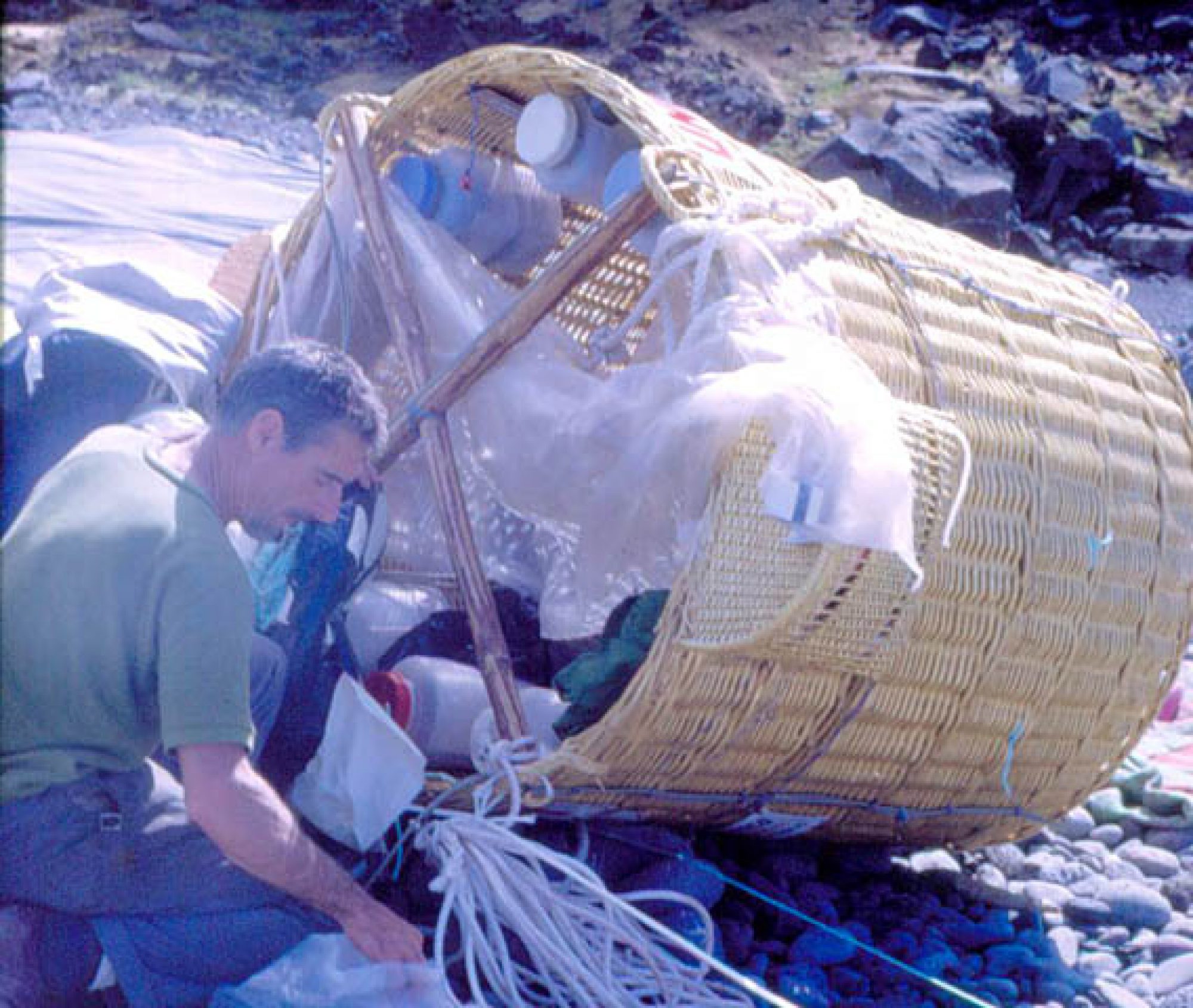
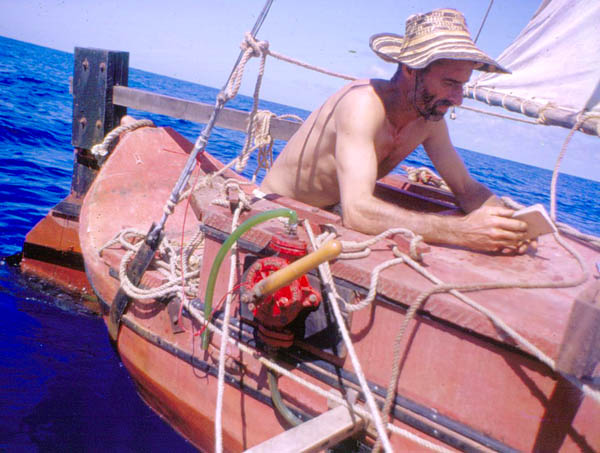
Hello, my name is Trenton Zylstra, I’m a graduate student at East Carolina University who has because of my research into the construction of Senegambian watercraft had the chance to work with one of the boats used by Francis Brenton. The boat was used during his crossing of the Atlantic from Senegal to the US, and was given to the Field Museum along with the other boat he used. This specific boat I looked used to be a fishing boat used along the coast near Dakar in Senegal. The boat from Senegal and the other boat from South America were in the basement collections of the museum next to other large items including such impressive things as a bronze bathtub from Pompeii, and a cart of Egyptian hieroglyphs which needed to be wheeled out of the way to access the boat. The boat itself had been put away when it first arrived at the museum years ago and never looked at again, ending up sitting unknown in a storage room until it was rediscovered and moved to its present position on a large shelf.
I had been sent pictures of the boat before arriving but the impression it gave in person was of a boat that had barely made the voyage to where it ended up. The layer of red paint and tar Brenton had added over the boat was faded and worn completely off in many places revealing the original colorful designs the boat had been painted with. Where there should have been a proud projecting cutwater to part the waves of the rough Senegalese surf zone at the bow instead there was a cracked and peeling front cover with a gaping hole in the bottom, alongside exposed tar, hanging caulking, and rusting nails. The bow had evidently taken one too many ocean waves during the voyage it was never built to take, finally tearing off or being pried off after being mangled. Despite this wound, the study boat appeared otherwise solid, and the buoyant kapok wood used to construct it and intended to keep it unsinkable in the rough surf zone had allowed the boat to survive. From the few glimpses that could be seen inside the sealed boat, it appears the broken bow may have been placed inside the boat alongside other items.
After we had managed to get the boat down from the shelf, I set about the work of recording every visible feature of the boat and taking photos of the whole thing along with detailed measurements. I spent the whole day recording and measuring and still, there were many more measurements I would still have liked to have taken. It’s no small task to record even a small boat. I have since processed all the data I collected from my time with the boat but research continues and will take a long time before it can be published. This was just one boat however, maybe someday another researcher will come along and record the other boat in as much detail. The act of research has a tendency to only lead to more questions and things to do. (November, 2021)
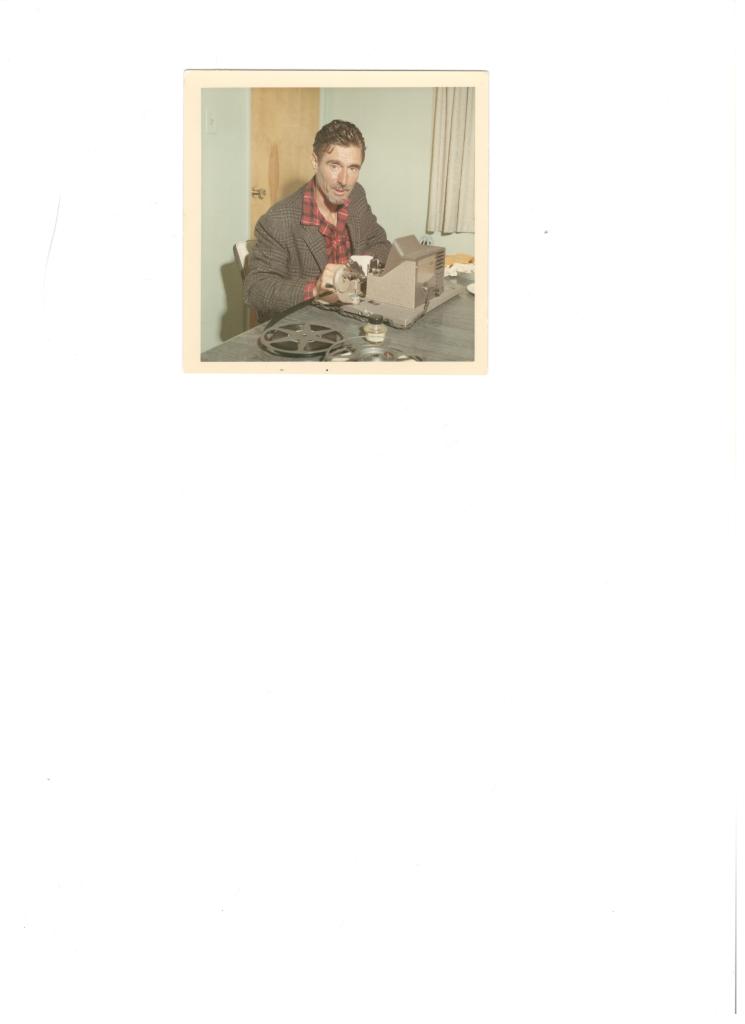
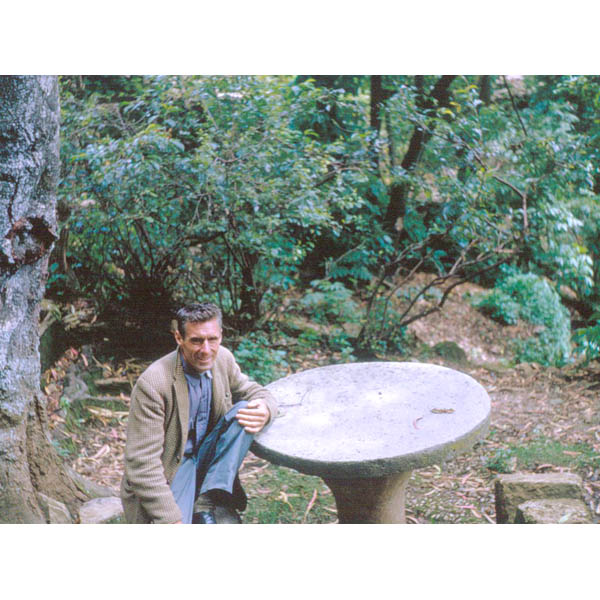
 Francis Brenton